

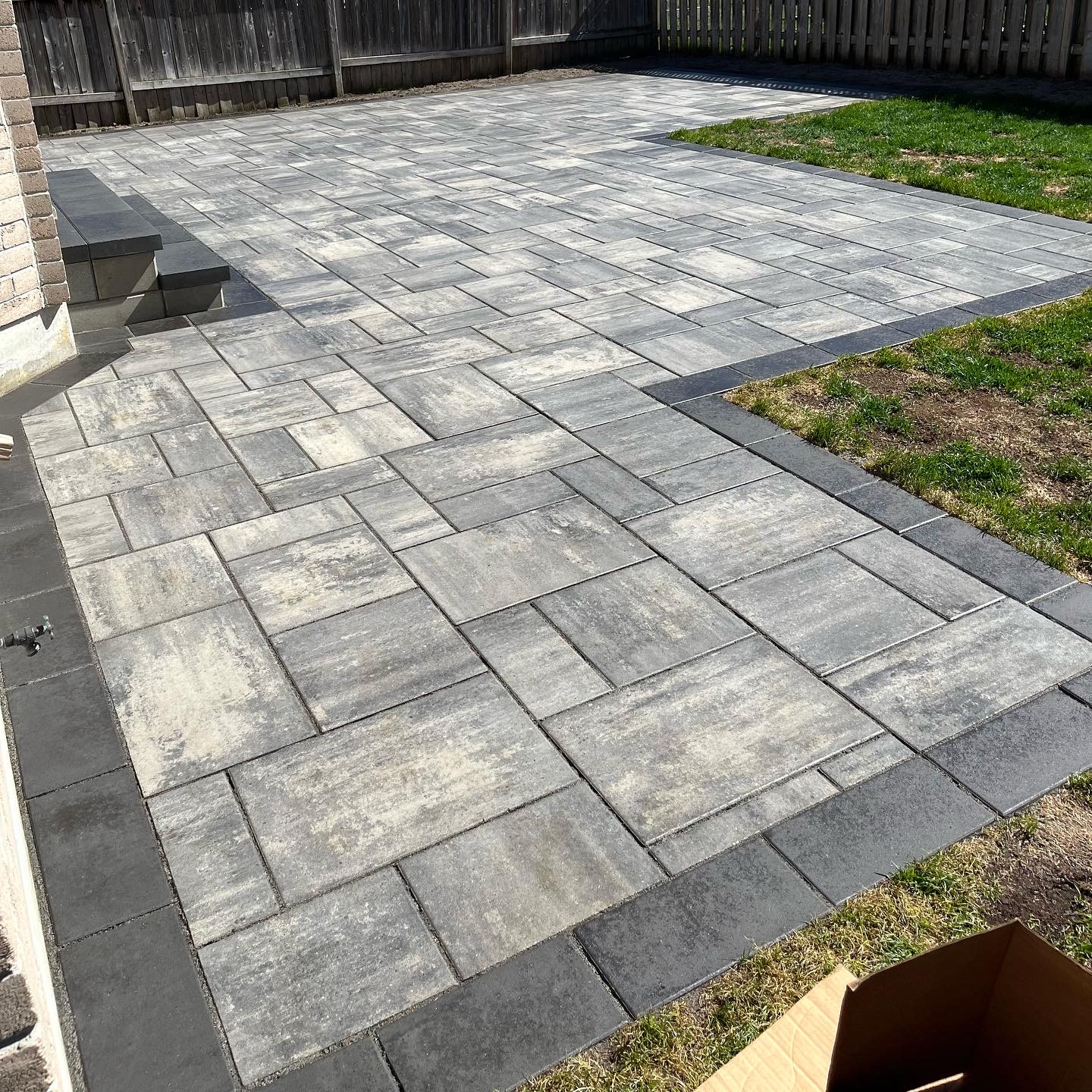
Sealers act as decorative and protective topcoat for concrete surfaces and should be applied after concrete has cured or soon after interlock pavers have been installed. In this blog post we will discuss the key differences between water-based and solvent-based sealers, their pros and cons, and how to determine which option is best for your project.
Water-Based Sealers
Water-based sealers can be used to seal both new and existing concrete surfaces. In comparison to solvent-based sealing products, water-based sealers have lower volatile-organic compound (VOC) levels and contain less of an odor, which is why they are more appropriate for indoor sealing applications. The water-based sealing application process is greatly affected by environmental conditions such as temperature and humidity.
Because water is the carrier, these sealers tend to dry faster and are more environmentally friendly. They typically produce a natural or matte finish, although some enhanced or satin finishes are available. Water-based products also reduce the risk of bubbling and blistering when applied correctly.
However, not all water-based sealers are created equal.
Lots of times people will decide to seal their outdoor concrete surfaces themselves using a cheap water-based sealer that they found at their local hardware store — and this can be a huge mistake. Lower-quality products often have lower solid content, meaning less protection and shorter lifespan. Improper surface preparation or incorrect application can also lead to peeling, whitening (blushing), or uneven finishes.
Water-based sealers generally:
-
Have lower VOCs and odor
-
Are safer for indoor use
-
Offer a more natural-looking finish
-
May require more frequent reapplication
-
Can be sensitive to weather during installation
Solvent-Based Sealers
Solvent-based sealers are typically made of dissolved polymers in a petroleum solvent (like xylene). They usually have higher VOC levels and stronger odors than water-based sealers.
These sealers are known for enhancing color and providing a richer, “wet look” appearance on concrete and interlock pavers. They penetrate deeply into the surface and often create a stronger film, which can translate to longer-lasting protection when applied properly.
Solvent-based sealers are generally more durable in high-traffic areas and tend to perform better in harsher outdoor environments. However, because of their higher VOC content, they require proper ventilation and must be applied with greater care to avoid issues such as over-application, bubbling, or trapping moisture.
Solvent-based sealers generally:
-
Enhance and deepen surface color
-
Provide a glossier, wet-look finish
-
Offer strong durability and protection
-
Contain higher VOCs and stronger fumes
-
Require experienced handling and application
Which One Is Better?
The answer depends on the surface, environment, desired finish, and long-term maintenance goals.
For indoor concrete floors or environmentally sensitive areas, a high-quality water-based sealer is often the better choice. For outdoor driveways, patios, walkways, and interlock projects where durability and color enhancement are priorities, solvent-based sealers are often preferred.
It’s important to understand that the product itself is only part of the equation. Proper surface preparation — including cleaning, joint sanding (for pavers), moisture testing, and timing — plays a major role in how well the sealer performs.
Why Professional Application Matters
The sealing process can be more complicated than it seems and should be left to experienced professionals to do the job correctly. Factors such as surface porosity, previous coatings, weather conditions, and application method (spray vs. roller) all impact the final result.
Choosing the right product is important — but applying it correctly is what ensures long-term protection, enhanced appearance, and maximum value for your investment.
If you’re unsure which sealer is right for your project, we’re happy to assess your surface and recommend the best solution for long-lasting results.
